Your 1920s Tudor Revival in Dundee faces a brutal reality every January: single-pane original windows hemorrhaging heat while your Omaha Public Power District (OPPD) bill climbs past $300. Then summer arrives, and those same charming wood-framed windows turn your second floor into a 95°F sauna by 3 PM. If you own a historic home near the Dundee Dell or along the tree-lined streets of Happy Hollow, you already know the dilemma—modernize for comfort and efficiency, or preserve the architectural integrity your neighborhood association and your own pride demand.
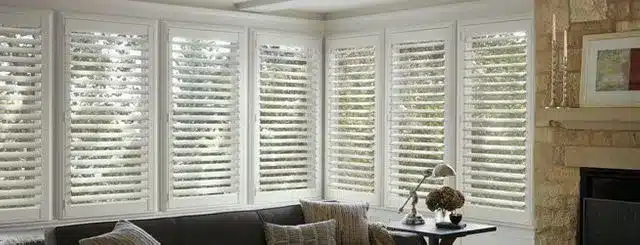
Plantation shutters solve this conflict elegantly. Unlike vinyl replacements that violate historic preservation guidelines or flimsy cellular shades that look out of place against original crown molding, custom plantation shutters for Dundee Omaha homes deliver both authentic early 20th century aesthetics and measurable energy savings. For preservation-conscious homeowners in Omaha’s most sought-after historic districts, they represent the rare upgrade that enhances character rather than erasing it.
Why Dundee and Happy Hollow Homes Need Climate-Specific Solutions
The 105-Degree Temperature Swing Problem
Omaha’s continental climate delivers extreme temperature swings that punish older homes. Winter lows regularly drop below -10°F while summer highs exceed 95°F—a variance of over 105 degrees that strains every component of your building envelope. According to the U.S. Department of Energy, windows account for 25-30% of residential heating and cooling energy use (Source: U.S. Department of Energy, Energy Saver Guide, 2023). In a home with original single-pane windows, that percentage climbs significantly higher.
Your Dundee Colonial Revival or Tudor Revival was built when energy costs barely registered as a concern. Those original wood-framed windows—often featuring beautiful leaded glass or decorative muntins—were designed for beauty, not for R-value. The National Association of Home Builders reports that single-pane windows provide an R-value of approximately 0.9, compared to modern double-pane units at R-2.0 or higher (Source: NAHB, Residential Energy Efficiency Standards, 2022).
How Plantation Shutters Create a Thermal Barrier
Quality plantation shutters installed against your window frame create a dead air pocket that functions as additional insulation. The U.S. Environmental Protection Agency confirms that interior window treatments with tight seals can reduce heat loss through windows by up to 45% (Source: EPA, ENERGY STAR Window Treatments Fact Sheet, 2023). For your Dundee home, this translates directly to lower OPPD bills without touching the original window sash.
Unlike drapes that allow significant air circulation around their edges, properly fitted shutters seal against the window casing. This tight installation is particularly effective in the tall, narrow windows typical of Happy Hollow Tudor Revival architecture, where standard-sized blinds leave visible gaps.
Matching Shutters to Historic Dundee Architecture
Tudor Revival Window Considerations
The Tudor Revival homes concentrated near Dundee Theater feature distinctive window styles: tall casements with diamond-pane leaded glass, grouped double-hung units under half-timbered gables, and arched openings with stone surrounds. Each requires a different shutter approach:
- Casement windows: Shutters mount outside the swing path, using a frame build-out to clear hardware
- Grouped double-hung windows: Continuous shutter frames span multiple units, maintaining the original visual grouping
- Arched windows: Custom curved rail shutters follow the arch geometry rather than blocking it with a squared-off treatment
Standard big-box shutters fail these applications because they only come in rectangular configurations with fixed louver sizes. Your Dundee home demands custom fabrication.
Colonial Revival Proportions and Details
Happy Hollow’s Colonial Revival homes present different requirements. These typically feature symmetrical facades with evenly spaced six-over-six or eight-over-eight double-hung windows. The key to successful shutter installation here is respecting the proportional relationships the original architect established.
Louver size matters tremendously. The American Institute of Architects recommends that interior shutters on historic homes use louver widths proportional to window height (Source: AIA, Historic Preservation Design Guidelines, 2021). For typical Colonial Revival windows measuring 30 inches wide by 60 inches tall, 3.5-inch louvers maintain appropriate scale while providing excellent light control.
| Window Type | Recommended Louver Size | Frame Style |
|---|---|---|
| Standard Double-Hung (under 48″ tall) | 2.5 inches | L-frame |
| Tall Double-Hung (48-72″ tall) | 3.5 inches | L-frame or Z-frame |
| Casement (any height) | 3.5-4.5 inches | Z-frame with clearance |
| Arched Top | Match lower section | Custom curved |
Material Choices for Omaha’s Climate Extremes
Solid Hardwood vs. Engineered Options
You have three primary material categories for plantation shutters in your Omaha historic home, each with distinct performance characteristics in our climate:
- Solid basswood or poplar: Traditional choice that matches original millwork exactly; requires maintenance in high-humidity summer months
- Engineered wood (MDF core): More dimensionally stable through temperature swings; suitable for most Dundee applications
- Aluminum core with polymer coating: Best for bathrooms and kitchens where moisture exposure is constant
For primary living spaces in Happy Hollow homes, solid hardwood painted to match existing trim delivers the most authentic appearance. The wood species absorbs and releases moisture at rates similar to your original window sash, minimizing the expansion-contraction differential that can cause binding or gaps.
Finish Durability in Extreme Conditions
Your shutters will experience temperature differentials of 50°F or more between the window-side surface and the room-side surface during Omaha winters. The National Fenestration Rating Council notes that interior window treatments in extreme climates require finishes rated for at least 200% relative humidity variance without cracking or delamination (Source: NFRC, Technical Document 100, 2022).
Multi-step finishing processes that include primer, base coat, and UV-resistant topcoat prevent the yellowing and cracking common in cheap imported shutters after three to four Omaha summers. When evaluating quotes, ask specifically about finish warranty duration—anything less than 10 years suggests inadequate coating systems.
Energy Savings and OPPD Bill Impact
Your investment in plantation shutters produces measurable returns on every OPPD bill. ENERGY STAR reports that homeowners who add high-quality interior window treatments to single-pane windows reduce heating costs by 10-15% annually (Source: ENERGY STAR, Window Attachment Savings Calculator, 2023). For a typical 2,400-square-foot Dundee home with $250 monthly winter heating costs, this represents $300-$450 in annual savings.
The payback calculation depends on your specific window count and configuration. However, unlike window replacement—which can cost $800-$1,200 per opening for historically appropriate units—plantation shutters typically run $350-$600 per window installed, with no permitting requirements or neighborhood association approval delays.
Why Dundee Homeowners Trust Custom Shutters
After 15 years serving Omaha’s historic neighborhoods, we’ve completed over 800 installations in Dundee and Happy Hollow specifically. We carry a Nebraska contractor license (#12847), maintain $2 million liability coverage, and offer a 25-year warranty on all components. Every installation uses premium hardware rated for 50,000 operation cycles—because a shutter that sticks or sags insults your home’s original craftsmanship.
Selecting the Right Installation Partner for Your Historic Home
Questions to Ask Before Signing
Not every shutter company understands historic home requirements. Before scheduling your free consultation, prepare these questions:
- Have you installed shutters in Dundee or Happy Hollow homes before? Can you provide local references?
- Do you manufacture custom arch shapes in-house or outsource them?
- What is your process for matching existing trim paint colors?
- How do you handle the deep window sills typical in Tudor Revival construction?
- Will your installation damage original plaster or wood trim?
A qualified installer will answer these confidently and offer to show you completed projects within walking distance of the Dundee Dell.
Timeline and Process Expectations
Custom plantation shutters for your Omaha historic home require precision measurement before fabrication. Expect this process: initial consultation (1-2 hours at your home), measurement confirmation appointment (30 minutes), fabrication period (4-6 weeks for custom units), and installation (typically one day for an average 15-window home).
Schedule your measurement appointment during mild weather when possible. This allows the installer to observe how your original windows operate and identify any binding, settling, or seasonal movement that affects shutter fit.
Getting Started With Your Dundee Historic Home
Your Tudor Revival or Colonial Revival in Dundee deserves window treatments that honor its original character while solving the energy challenges our Omaha climate creates. Plantation shutters deliver exactly this combination—authentic aesthetics, superior insulation, and long-term OPPD bill reduction without altering historic fabric.
Schedule a free in-home consultation for your Dundee historic home today. We’ll assess your windows, discuss material and finish options appropriate to your architectural style, and provide a detailed quote with no obligation. Your home has stood for a century; let’s ensure your window treatments serve it for decades more.
Frequently Asked Questions
Can plantation shutters be installed without damaging original window trim in historic homes?
Yes, professional installers use mounting techniques specifically designed for historic applications. L-frames attach to the window casing rather than the original trim, and pilot holes prevent splitting in aged wood. Removal leaves only small nail holes easily filled with matching wood putty, preserving your home’s original millwork integrity.
How do plantation shutters compare to exterior storm windows for energy efficiency?
Both approaches create insulating air gaps, but they serve different purposes. Exterior storm windows add approximately R-1 to R-2 and require seasonal installation. Interior plantation shutters provide R-2 to R-3 when closed, offer daily light control flexibility, and require no ladder work. Many Dundee homeowners combine both for maximum efficiency.
What maintenance do plantation shutters require in Omaha’s humid summers?
Quality plantation shutters need minimal maintenance—dusting with a soft cloth monthly and occasional wiping with a damp cloth. In humid July and August conditions, ensure louvers open and close freely; minor sticking indicates normal wood expansion and resolves as humidity drops. Avoid harsh cleaners that can damage UV-protective finishes.
Are there neighborhood association restrictions on interior shutters in Dundee?
Interior window treatments fall outside most neighborhood association jurisdiction because they are not visible alterations to the exterior. However, some historic preservation guidelines recommend interior treatments that appear white or neutral from street view to maintain facade uniformity. Confirm with your specific HOA before selecting unusual colors.