The Omaha Patio Problem Nobody Talks About
Your West Omaha deck looked perfect in May. By August, the cushions were sun-bleached. By January, wind-driven snow piled against the sliding door. Omaha’s 120-degree annual temperature swing—from -20°F polar vortex nights to 100°F July afternoons—creates outdoor living conditions that coastal shade products simply cannot handle.
Here’s what makes your situation unique: you’re not just fighting sun or cold. You’re fighting sustained 25-40 mph winds that barrel across the open plains with nothing to slow them down between the Rockies and your backyard. Standard patio shades sold in Phoenix or Miami tear apart within two Nebraska winters. Your OPPD bill already climbs during summer cooling season—unshaded west-facing glass can add 15-25% to your air conditioning load (Source: U.S. Department of Energy, 2023).
This guide is for Omaha homeowners who want outdoor shades that actually survive here. Whether you live in a 1960s Elkhorn ranch or a new-construction home near TD Ameritrade Park, you’ll learn exactly which products work, which fail, and how to protect your investment.
Why Standard Outdoor Shades Fail in Nebraska
The Wind Factor Most Retailers Ignore
Most exterior shade products are tested in controlled environments with gentle breezes. Nebraska delivers something different. The National Weather Service reports Omaha experiences an average of 52 days per year with wind gusts exceeding 30 mph (Source: National Weather Service Omaha, 2024). Those gusts create uplift pressure that rips anchors from stucco, bends aluminum frames, and shreds woven fabrics.
If you’ve driven past Henry Doorly Zoo after a spring storm, you’ve seen what plains wind does to temporary structures. Your patio shade needs to withstand the same forces.
Thermal Cycling Destroys Cheap Materials
When temperatures swing from 5°F to 55°F within 48 hours—common during Omaha’s volatile March weather—materials expand and contract dramatically. Plastic components crack. Metal fasteners work loose. Fabric weaves separate at stress points. Products rated for “outdoor use” in temperate climates often fail within 18 months here.
The solution isn’t buying the most expensive shade. It’s buying shades engineered for thermal cycling, wind load, and UV degradation simultaneously.
Outdoor Shade Types That Survive Omaha Weather
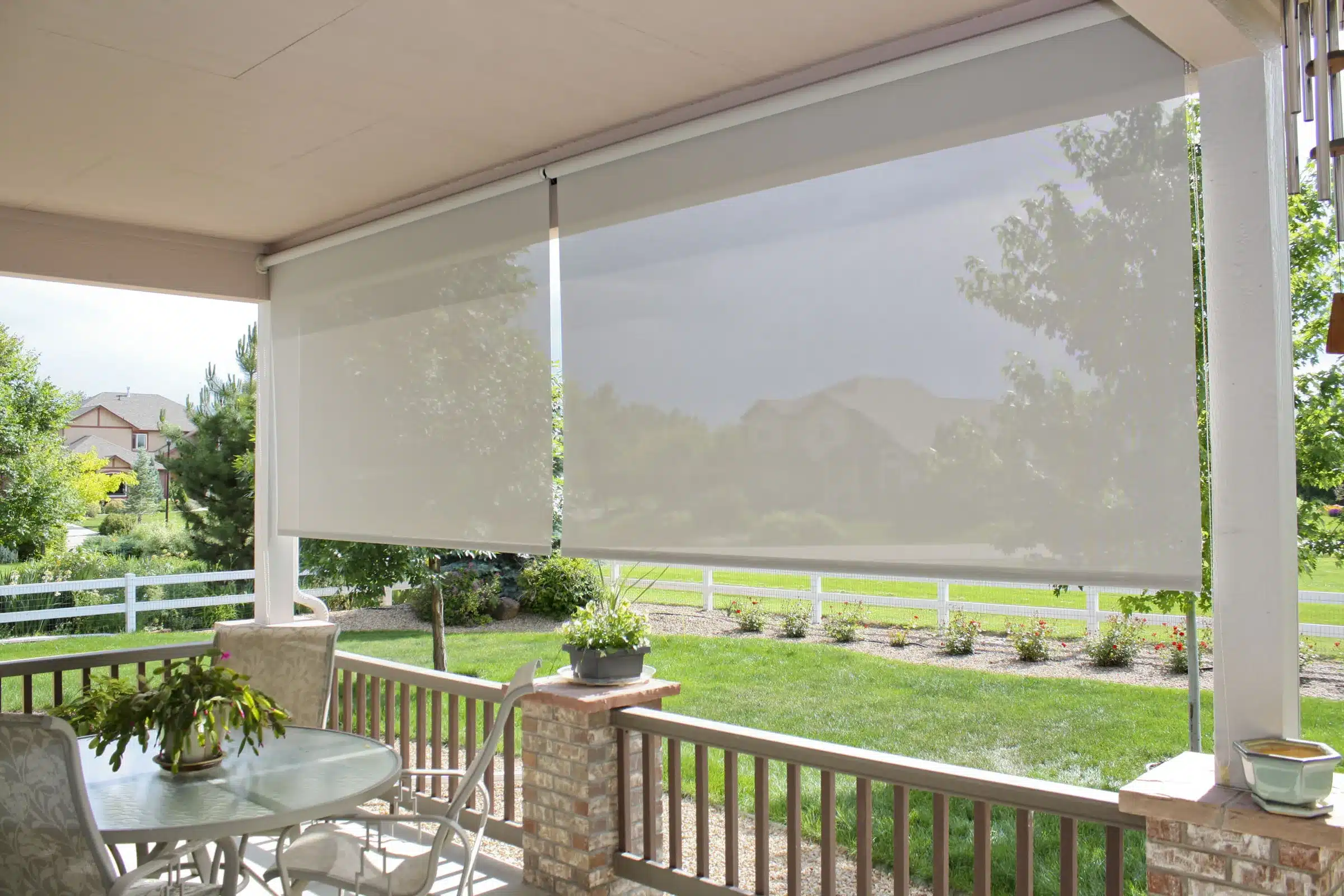
Motorized Exterior Roller Shades
These retract into protective housing during severe weather. Key features for Nebraska:
- Wind sensors that auto-retract at 25+ mph—essential for sudden prairie thunderstorms
- Aluminum side channels that lock fabric edges against wind flutter
- Solution-dyed acrylic fabrics that resist UV breakdown (minimum 1500-hour fade rating)
- Powder-coated steel brackets rated for -30°F to 120°F operation
Motorized shades integrate with smart home systems, letting you control sun exposure from your phone. When OPPD rates spike during summer peak hours, you can drop shades remotely to reduce cooling load.
Fixed Exterior Solar Screens
For West Omaha homeowners who want set-it-and-forget-it protection, fixed solar screens mount permanently over windows and patio openings. They block up to 90% of solar heat gain while maintaining outward visibility (Source: ENERGY STAR Program Requirements, 2024).
Best applications for Omaha homes:
- West-facing patios on mid-century ranches where afternoon sun creates oven conditions
- Covered porches on craftsman bungalows where sun angles change dramatically between seasons
- Modern new construction with large glass panels that amplify heat gain
Retractable Awnings with Wind-Rated Frames
Look for awnings with Class 2 wind resistance (withstands 28 mph sustained winds) at minimum. Lateral arm designs with reinforced joints outperform traditional folding arms in Nebraska conditions.
Louvered Pergola Systems
Aluminum louvered pergolas let you adjust blade angles for sun control, then close completely during rain or snow. Premium systems withstand 110 mph wind loads and 40 pounds-per-square-foot snow loads (Source: International Building Code, 2021). They’re the most expensive option but offer year-round Omaha patio use.
| Shade Type | Wind Rating | Best For | Lifespan in Omaha |
|---|---|---|---|
| Motorized Roller | 25+ mph (auto-retract) | Variable sun control | 8-12 years |
| Fixed Solar Screen | 40+ mph | Permanent heat reduction | 10-15 years |
| Retractable Awning | 20-28 mph | Flexible coverage | 5-8 years |
| Louvered Pergola | 110+ mph | Year-round use | 20+ years |
How to Choose the Right System for Your Omaha Home
Match the Shade to Your Architecture
Your home’s style affects both aesthetics and installation requirements:
Mid-century ranches (common in established Elkhorn neighborhoods): Low rooflines and wide eaves work well with motorized roller shades mounted under soffits. The horizontal lines complement ranch architecture.
Craftsman bungalows: Tapered columns and detailed trim require custom bracket designs. Retractable awnings in earth tones blend with traditional craftsman palettes without competing with architectural details.
Modern new construction: Clean-lined louvered pergolas and frameless solar screens suit contemporary homes. Black or bronze finishes integrate with modern window frames common in new Omaha developments.
Calculate Your Actual Energy Savings
West-facing windows without shading can reach interior surface temperatures of 140°F during July afternoons. The U.S. Department of Energy estimates that exterior shading reduces cooling energy use by 25-30% compared to interior blinds alone (Source: U.S. Department of Energy Energy Saver Guide, 2024).
For a typical 2,500-square-foot Omaha home paying $180/month summer electric bills to OPPD, properly installed exterior shades can save $45-54 monthly during peak cooling months. That’s $270-324 saved per summer season.
“The investment pays for itself faster than most homeowners expect. Between OPPD savings and extended patio usability, outdoor shades deliver measurable returns that indoor window treatments simply cannot match in Nebraska’s climate.”
Verify Wind Load Specifications Before Purchase
Ask any installer these questions:
- What is the tested wind load rating for this specific product?
- How are anchors specified for my exterior wall material (brick, stucco, wood siding)?
- Does the warranty cover wind damage, and under what conditions?
- Are replacement parts stocked locally, or shipped from out of state?
If your installer cannot provide documented wind ratings, consider that a red flag. Omaha weather demands verified performance, not sales promises.
Installation Considerations for Nebraska Homes
Timing Matters
Schedule installation during Omaha’s mild shoulder seasons—April through May or September through October. Summer installations mean working in extreme heat with materials that expand during mounting. Winter installations risk anchor failure in frozen masonry.
Permit Requirements
Freestanding structures like pergolas typically require building permits in Douglas County. Mounted shades and awnings may not, depending on projection distance from your home. Your installer should handle permit verification—this protects your warranty and future home sale.
Utility Considerations
If your shade system includes motorized operation, verify that OPPD service panel has capacity for additional circuits. Modern smart shade systems draw minimal power, but integrated patio heaters or fans may require electrical upgrades.
Ready to protect your outdoor living space from Nebraska’s extreme weather? Schedule your free outdoor shade consultation in Omaha today. We’ll assess your specific patio orientation, architectural style, and sun exposure to recommend the right system for your home.
Why Omaha Homeowners Trust Local Shade Expertise
National retailers selling outdoor shades often ship products designed for gentler climates. Local expertise matters here. Understanding how a West Omaha subdivision sits relative to prevailing winds, or how morning fog near the Missouri River affects fabric moisture, requires boots-on-the-ground experience.
We’ve installed exterior shades on historic homes in Dundee, new builds in Elkhorn, and everything in between. Our installers know which anchor systems hold in Omaha’s clay-heavy soil, which fabrics resist the salt and sand spread on winter roads, and which motor brands survive -20°F cold snaps without seizing.
Don’t let another summer bake your patio furniture or another winter trap you indoors. Get a free quote for patio shades in Omaha and start using your outdoor space year-round.
Frequently Asked Questions
How do outdoor shades perform during Omaha’s severe thunderstorms?
Motorized outdoor shades with wind sensors automatically retract when gusts exceed 25 mph, protecting the fabric before damage occurs. Fixed solar screens and louvered pergolas are designed to withstand severe weather without retraction—quality systems handle 40-110 mph winds depending on type. After storms pass, motorized systems redeploy automatically. For homes in wind-exposed areas like western Elkhorn, we recommend either auto-retracting motorized systems or high-wind-rated fixed installations rather than manual awnings that rely on homeowner action.
Can I use outdoor shades year-round in Nebraska, or do I need to remove them for winter?
Properly specified outdoor shades remain installed through Omaha winters without removal. Motorized roller shades retract into protective housings that shield fabric and motors from ice and snow. Fixed solar screens are rated for continuous exposure to freezing temperatures. Louvered pergolas actually excel in winter—closed louvers shed snow while blocking wind, allowing enclosed patio heater use. The key is selecting materials rated for -30°F operation with thermal-cycling-resistant components. Budget-grade products marketed for southern climates require seasonal removal and often void warranties if left exposed to Nebraska winters.
What maintenance do exterior shades require in Omaha’s dusty plains environment?
Nebraska’s agricultural dust and road grit require seasonal cleaning—typically spring after pollen season and fall after harvest. Most exterior shade fabrics clean with mild soap solution and soft brush; avoid pressure washers that can damage fabric coatings. Inspect hardware twice yearly for loose fasteners caused by thermal expansion cycles. Lubricate motorized tracks annually before winter using manufacturer-specified silicone lubricant. Check wind sensors monthly during storm season to ensure auto-retract functions properly. With this maintenance schedule, quality outdoor shades last 8-15 years in Omaha conditions versus 3-5 years for neglected installations.